
When an emergency strikes, the immediate focus is rightly on survival: keeping people safe, treating illness, finding shelter, and responding to urgent needs.
But for children, another crisis can unfold alongside the first one.
Family separation.
In October, UNICEF reported that more than 1,900 children in eastern Democratic Republic of the Congo had lost or been separated from one or both parents or caregivers during the ongoing Ebola outbreak. Some parents became ill or passed away, while others required treatment away from their children. Fear of infection and stigma sometimes made relatives or neighbors hesitant to step in and help support those families during these separations.
Although Miracle Foundation is not directly involved in the Ebola response in the Democratic Republic of the Congo. But this crisis illustrates a challenge that child-protection systems around the world must be prepared to address:
When a crisis disrupts a family, how do we help children return to safe, stable family care as quickly and sustainably as possible?
Family separation can become an emergency within an emergency
Children become separated from families for many reasons.
Sometimes the cause is abuse or neglect. But separation can also begin with poverty, migration, natural disaster, conflict, illness, or the sudden loss of a caregiver.
In those moments, the safest short-term solution may be temporary care.
But temporary care should not quietly become permanent simply because a family is difficult to locate or because the support needed for reunification is not immediately available.
That is why family tracing and case management matter so much.
Finding a child’s relatives is only the first step.
The next question is whether that family has what it needs to safely care for the child.
Reunification requires understanding the whole family
Imagine a child whose parent has been hospitalized during an emergency.
The parent recovers. The family is located. Reunification seems like the obvious next step.
But what has changed while that parent was sick?
Has the household lost its income?
Is the home still safe?
Can the child return to school?
Does the caregiver have access to health care?
Are relatives or neighbors available to help?
Has the child experienced trauma that requires additional support?
If those questions are ignored, reunification may happen without addressing the conditions that could destabilize the family again. This is where structured family assessment becomes important. At Miracle Foundation, our Thrive Scale™ methodology looks across five interconnected areas of well-being:
- Family and social relationships.
- Household economy.
- Living conditions.
- Education.
- Physical and mental health.
It is to give social workers and families a consistent way to understand strengths, identify risks, prioritize urgent needs, and track whether the support being provided is actually helping.
What could that look like after an emergency?
Once a child and family have been identified and the immediate emergency has stabilized, a structured assessment can help guide the next phase. A caseworker could use a framework like the Thrive Scale to determine whether a reunited family needs food or income support, safe housing, physical or mental health care, help returning a child to school, stronger connections to extended family, or another intervention.
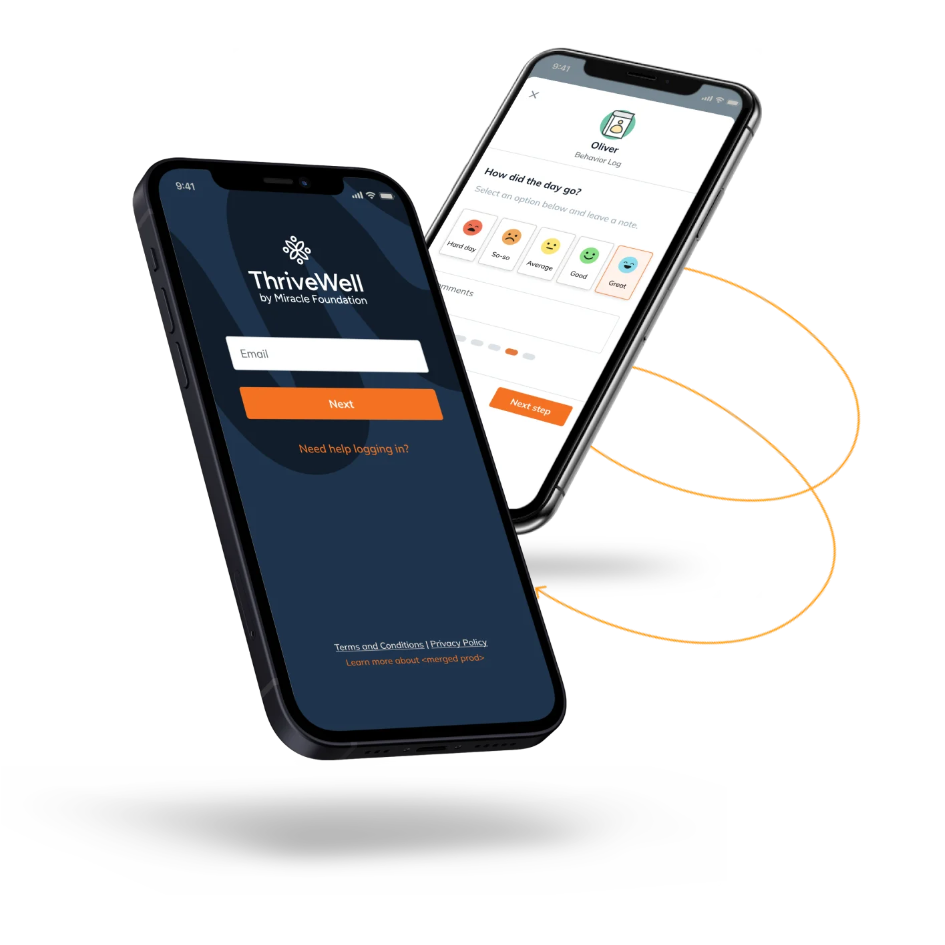
Those needs can then become part of a case plan. And just as importantly, the family can be reassessed over time.
Are living conditions improving?
Is the child back in school?
Is the caregiver receiving the support they need?
Has the family’s financial situation stabilized?
Does the child feel safe?
Are the relationships surrounding the child becoming stronger?
Miracle Foundation developed an expedited case-management approach during COVID-19 when children were being reunited with their families rapidly, and our publicly available guidance notes that the process can also be relevant in urgent situations such as natural disasters or immediate orders for reintegration.
That experience reinforced something we believe deeply: Speed matters in a crisis, but so does what happens after the crisis.
Technology and data can help preserve continuity
Emergency situations also create another challenge; information can become fragmented quickly.
A family may interact with health workers, social workers, government agencies, schools, community organizations, and humanitarian responders. If each part of the system sees only one piece of the family’s situation, important risks can be missed. Structured case-management tools can help create continuity. They can give frontline workers a shared picture of what a family needs, which interventions have already been provided, and what still requires attention. Technology cannot replace the judgment or relationship of a social worker. It can help that the social worker sees the whole picture and makes informed decisions sooner.
The goal is not simply reunification. It is lasting family care.
The Ebola outbreak in the Democratic Republic of the Congo is an emergency with its own context, systems, and response. Miracle Foundation is not working there, and we do not presume that one methodology is the answer to a crisis of this scale.
But the situation illustrates a universal principle. When children are separated from their families, getting them home matters. Making sure they can safely stay there matters just as much. That means investing not only in family tracing and reunification, but in the people, tools, services, and systems that support families after children return.
Because a family for every child is not simply about where a child is today. It is about building the conditions that allow that child to remain safe, stable, supported, and connected to family for the long term.